Training After 40 in Scottsdale: Why EMS Is Different
Your joints know the workout happened before you check the mirror. You wake up and something is stiff, or tight, or slightly off. Not injured. Not broken. More expensive than it used to be.
If you’re still training consistently in your 40s or 50s in North Scottsdale, that matters. But if you’re training the same way you trained at 28, you’re leaving results on the table and adding wear you don’t need. EMS fitness in Scottsdale is built specifically for this moment.
After 40, the Rules Actually Change
This is not motivational framing. It is biology.
Starting in your mid-30s, your body begins losing fast-twitch muscle fibers (the Type II fibers responsible for power, strength, and metabolic activity). That loss accumulates slowly into your 40s and beyond. It is not dramatic year over year, but it is cumulative. By the time most people notice it in the gym, the shift has been happening for a decade.
Recovery takes longer, too. Connective tissue (tendons, ligaments, the cartilage in your knees and hips) becomes less forgiving of high volume and high mechanical load. The long run, the heavy session, the three-days-on approach that worked at 30 all become something to manage rather than repeat.
None of this means you stop training. It means you train with a more precise tool.
What EMS Recruits That Conventional Training Misses
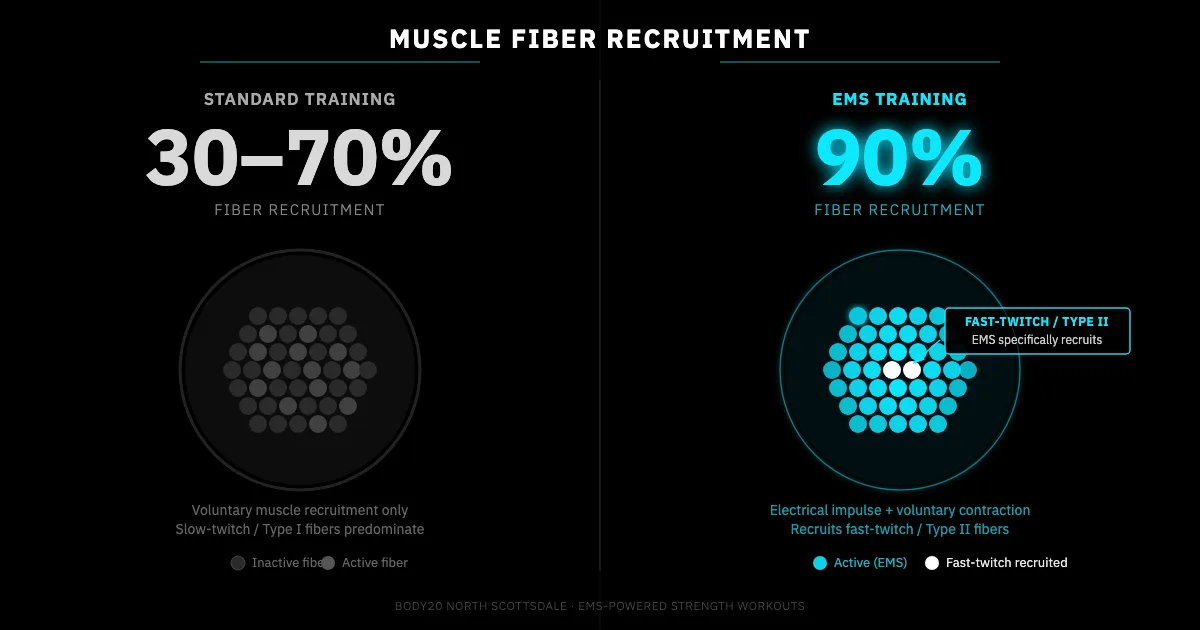
Standard resistance training reaches 30 to 70 percent of your muscle fibers, depending on the movement and how hard you push. EMS training at BODY20 reaches up to 90 percent, including the deep stabilizing muscles and the fast-twitch fibers that are hardest to access through voluntary contraction alone.
That last part matters after 40. The fibers your body is beginning to lose are the exact fibers EMS specifically recruits. A conventional gym session gets the muscle you can reach voluntarily. An EMS session reaches the full cross-section of what is actually there.
The mechanism behind that difference is explained in more detail in this guide to EMS training in Scottsdale.
The Joint Load Equation
EMS produces a strong training stimulus without requiring the mechanical load that causes most training-related wear after 40.
A 60-minute conventional session adds impact, friction, and repetitive stress to joints you are already managing. A 20-minute EMS session puts the intensity through the electrical signal, not through more weight, more reps, or more time on your feet. Your joints carry less. Your muscles do more.
This matters. Members who manage old knee injuries, shoulder history, or lower back concerns train at BODY20 regularly because the load profile is fundamentally different. Your coach knows your history and programs around it from session one.
What a BODY20 Session Looks Like After 40
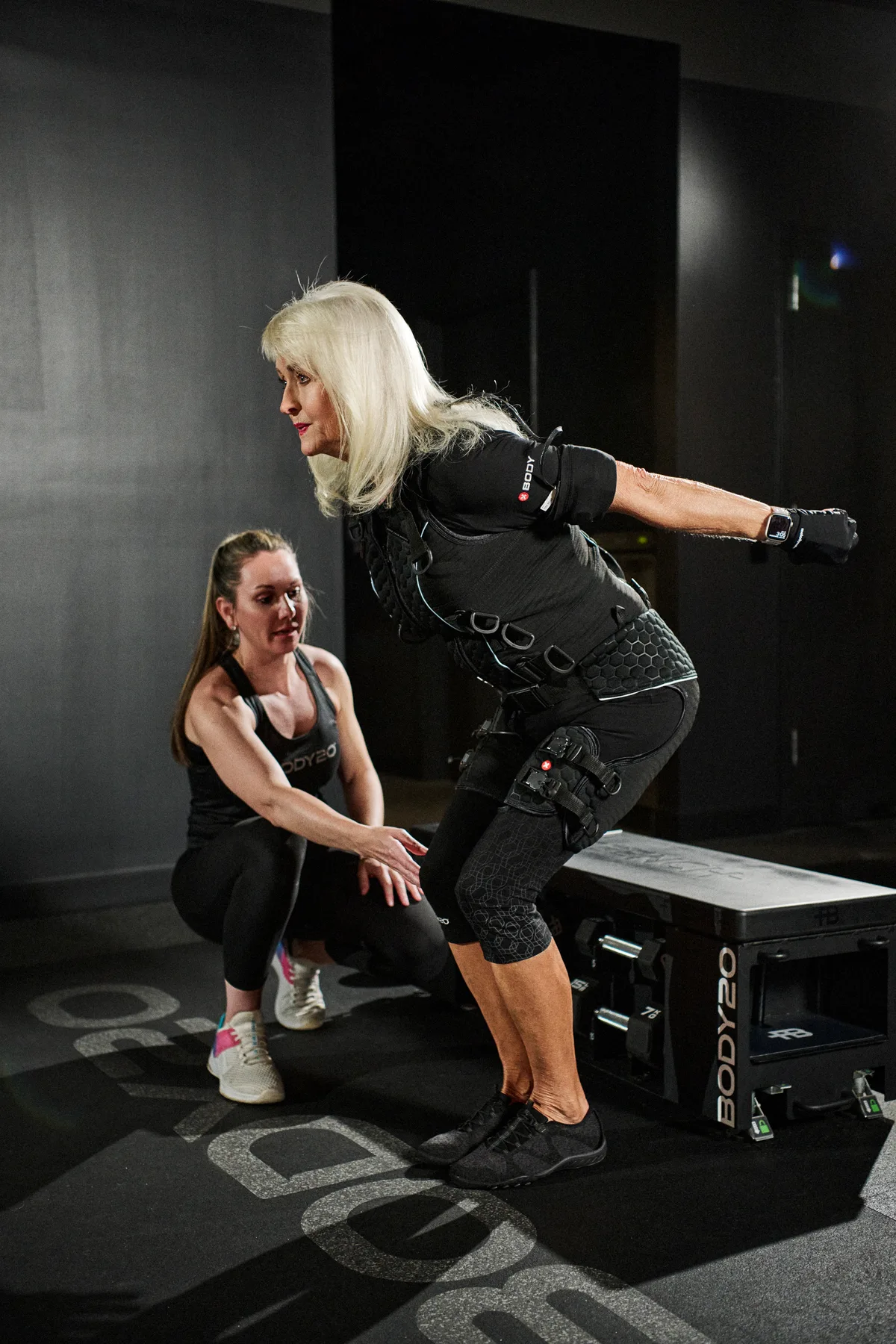
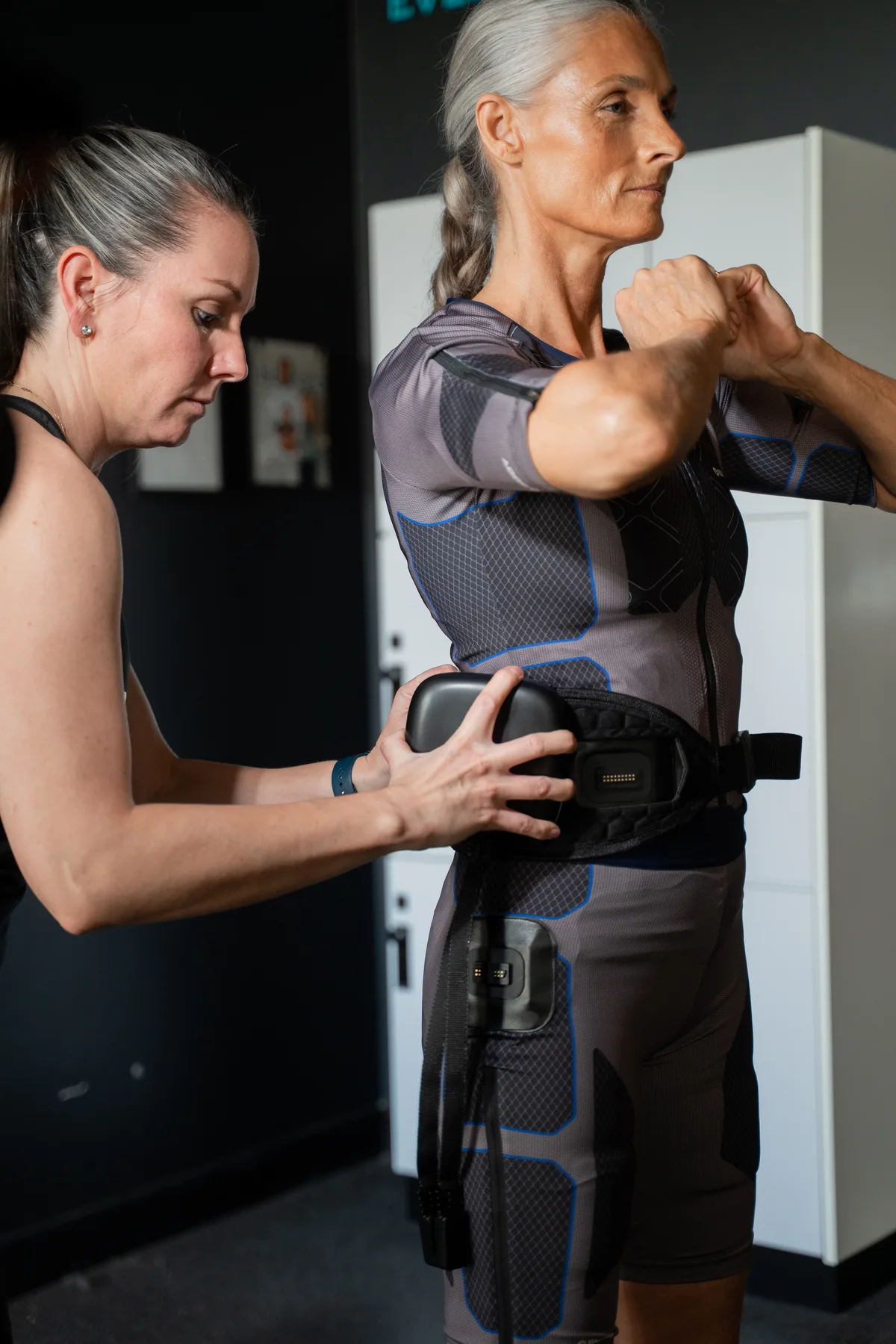
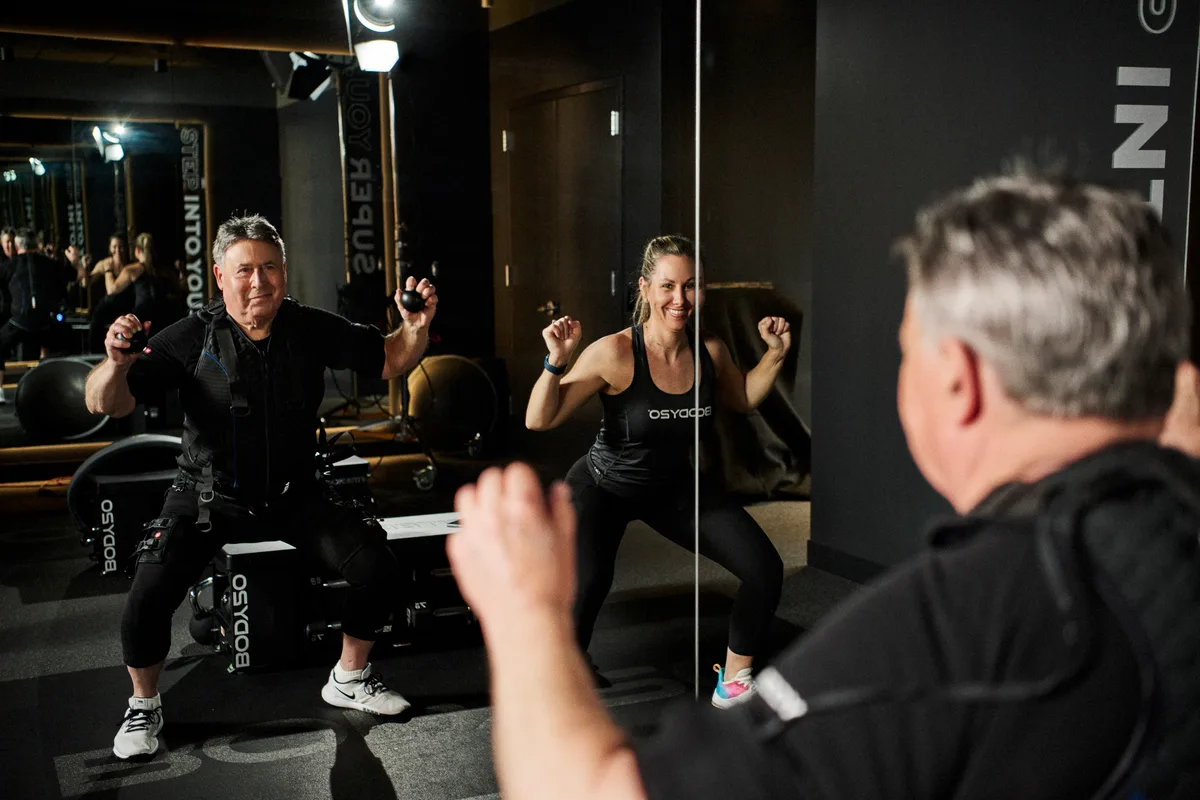
You arrive. Your coach fits the suit. The session starts where you are, not at a generic setting. Your coach adjusts EMS intensity to your current fitness level, any movement limitations, and what your body is doing that day.
You move through functional patterns (squats, rows, hinges, core work) while the suit amplifies the signal to every muscle group simultaneously. Twenty minutes of that is a complete stimulus. Not a scaled-down version of a real workout. The actual workout.
Your coach talks to you throughout. Adjusts. Pushes when there is room. Backs off when there is not. The suit carries no intelligence on its own. The coach is what makes the session.
After the initial adaptation window, most members train twice a week. The results compound faster than most people expect. The four-week training arc post explains exactly what changes and when.
North Scottsdale EMS Training for the Long Game
Scottsdale’s outdoor season returns in October. Starting EMS training now means sessions banked before fall. If your training has not been reaching those deeper fibers, there is more for EMS to work with from the first session. You start where the gap is largest.
The members at BODY20 North Scottsdale who are in their 40s, 50s, and beyond are not training despite their age. They are training for it. That distinction is the whole point.
Ready to try it? Book your first session at BODY20 North Scottsdale →